
"Impossible for all but the hard of heart not to get swept along in the magic of the Downs. It has the very best ingredients of a rural prep, somehow keeping children young while also prepping them for next steps."
We welcomed The Good Schools Guide to TDM, and this is what they said...
"Impossible for all but the hard of heart not to get swept along in the magic of the Downs. It has the very best ingredients of a rural prep, somehow keeping children young while also prepping them for next steps."
Since 2022, Andy Nuttall BSc PGCE MEd, previously deputy head of Windlesham House in West Sussex. State educated in Bath, and at Downside School for sixth form. Zoology degree from Imperial College London, PGCE from Bath and MEd in educational leadership and management from University of Buckingham. ‘Flirted with the army’ and ‘nearly did a PhD,’ but the long-term plan was always teaching so decided to sidestep both. Before Windlesham House, he taught at Cheam School and spent four years at The Banda School in Nairobi. In his spare time, he enjoys cross-country running, gardening and fly-fishing.
‘Goodness me, talk about a baptism of fire!’ said one parent sympathetically. Indeed, Mr N accepted the job only to discover the school was merging with nearby Elms School (at the Elms’ suggestion) then later that they weren’t (too many site issues at The Elms). ‘So I came full circle and got the job I applied for!’ United appreciation among parents for what they call the ‘Nuttall effect’ – explained by one mother as ‘an onwards and upwards approach of turning it into a positive, with a sharpening up of academics, restructuring of staff and a clearer vision of what we are.’ Other parents say he is ‘young, vivacious and inspiring’ and that he’s ‘brilliant, a breath of fresh air.’ Pupils describe him as ‘outgoing,’ ‘outdoorsy’ and say he’s ‘made the school feel more modern.’ He teaches year 8 science, plus woodwork and managing the school chickens, quails, pigs and sheep.
Lives onsite with wife Polly and their two young children, both at the school. An experienced prep teacher herself, she greeted us dressed head to toe as a ladybird. Had we arrived moments earlier, we’d have caught Mr N in a tarantula costume. Just another normal day at the Downs, then? ‘Oh no,’ they laughed, ‘It’s Earth Week!’ Alas, he’d just changed into a debonair pinstripe suit to meet prospective parents, but the rest of the staff and pupils remained in their various interpretations of nature themed outfits – all part of a week’s activities including sponsored fun run, vegetarian lunches, run to school, litter pic, planting, yoga and recycled fashion show.
Non-selective – can support all but those with serious learning difficulties. Entrance via taster days including informal observations and interviews, plus discussions with parents; higher up the school, CAT scores and reports and reference from last school also sought. Most join in nursery, reception and years 6 and 7, but increasingly in other years, including mid-year (18 in the year of our visit). No waiting lists; always worth asking about year group numbers.
Vast majority (85 per cent) make the move across the hills to Malvern College – similar ethos and curriculum makes for a seamless transition, say parents. The rest join local schools or further flung boarding schools – King’s Worcester, RGS Worcester, King’s College Gloucester, Hereford Cathedral School, Shrewsbury, Rugby and Malvern St James have all featured recently. Head tries to meet as many heads as possible ‘so I can guide those who don’t go to Malvern College.’ Conversations start early if it’s felt a pupil won’t thrive there. In 2023, an impressive 23 scholarships (including 17 to Malvern College).
The steep narrow roads and hairpin bends that meander through the Malvern Hills mean you need decent brakes and your wits about you, but there can be few school runs boasting views spanning quite so many miles. It’s an idyllic spot and although a downside is that it’s based at the end of a residential road that splits the school in half, the only vehicle we saw during our visit was a fire engine giving a demo to tinies in early years. Truth is you’re more likely to see walkers than cars. No wonder the school has stayed on the same site since it was founded by Quakers with just four boys back in 1900.
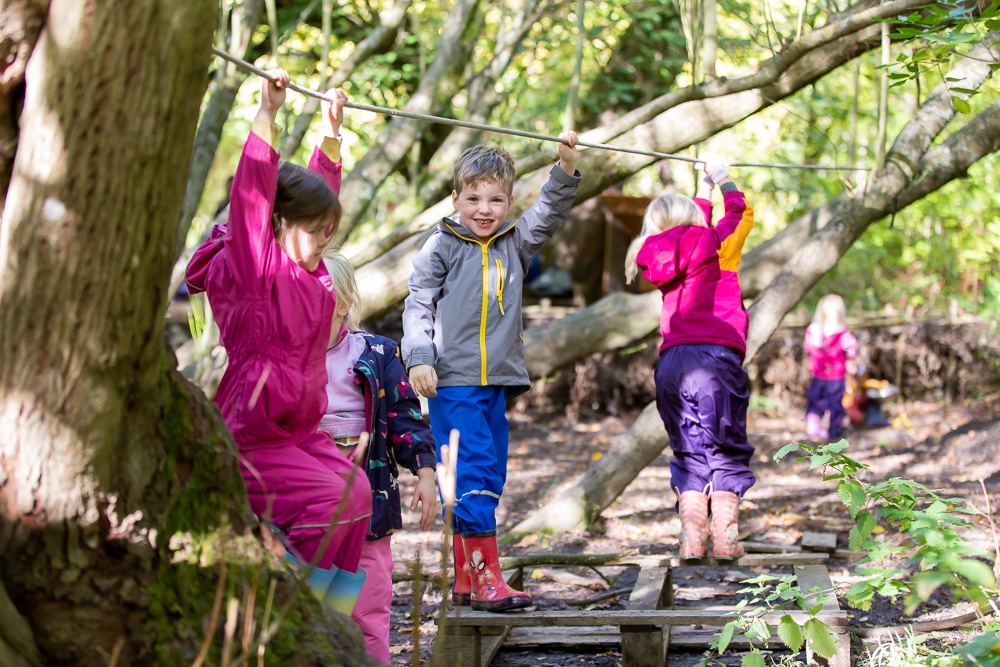
These days, it’s a place where children work and play hard, packing in heaps of wholesome fun along the way. Are they streetwise? No. Is it a bubble? Yes. And all the better for both. Climbing trees, making dens, playing spotlight, mountain biking and all mucking in for the next drama production are just some of the activities the pupils were (in some cases literally) jumping up and down to tell us about. On our tour, they cooed over the school animals and thought nothing of marching us up steep grass verges to show off every bit of land. The school has its own smallholding, with pigs, chickens, quails and sheep, and a market garden – both designed to educate children about the provenance of food and increase their environmental awareness. Perhaps what best sums up the timeless charm is the little steam train that runs through the school grounds. The oldest miniature light railway in the world, it is also an educational tool where the children learn serious engineering skills driving and maintaining it.

Pre-prep, with its own building and playground, houses nursery to year 2. Reception, a vast oblong room, has more zones than we’ve seen in some entire schools – bee challenges, glitter fun, play shops and post offices, building circuits and the Great Fire of London, to name a few. ‘Ah, I loved this room,’ said one of our guides nostalgically, while another paused to wish a little boy happy birthday – ‘We all know each other here,’ she told us proudly. Small classes – just seven in the year 2 class we dropped in on (max is 14) – mean teachers can weave their way around everyone. Creative, often topic-based, curriculum – castles were a theme during our visit.
From year 3, pupils move around to eg to science labs and language rooms, with specialist teachers added ‘organically’ along the learning journey. In geography (a prefab – don’t expect big shiny facilities here), year 7s were gearing up to discuss ‘What affects where we live?’ ‘That’s one of the best teachers – he’s really funny and a great sports teacher too,’ whispered our guide. The trial of King Charles I was the topic in year 8 history, where cartoons, videos and an animated teacher brought it to life. ‘Can you help me?’ said a pupil to the teacher in a maths lesson – indeed he could, thanks to those small classes. ‘Stretch not stress,’ is the school’s mantra, and parents say they cater for all: ‘One of my children is academic, the other less so, but they both feel challenged.’ ‘You definitely can’t just sit at the back and not get involved,’ said a pupil. French is all the way through, with Spanish or German, plus Latin, from year 6. Setting in core subjects from year 6. Perhaps not the best school at reacting to Covid, feel some parents who are using tutors to fill gaps – school says interventions have now been introduced. IT supports, not drives – ‘We’re not looking to become an Apple Distinguished school.’ Timetabled prep seen as a godsend by all – ‘no homework to do at home!’ grinned one pupil.
One SENCo supports children with all the usual conditions – dyslexia, ADHD, autism etc -mainly in class, but one-to-ones (costs extra) available. ‘They’ve put so much in place for my daughter and she knows exactly who to reach out with any issues, and they always keep me in the loop,’ said a parent.
Right from the school’s beginnings, extracurricular was prioritised – unusual back then, and strongly supported by the Cadbury family who came on board in the 1920s. The school built up quite a reputation for English and the arts (the painter Maurice Feild and the poet WH Auden were teachers), as well as for science (it was pupils who built the little steam train). Still now, the extracurricular programme is rich, running at lunchtimes, after school and on Saturday mornings (compulsory from year 6 but popular from year 4). Horse riding, golf, light railway, school newspaper, coding, Young Entrepreneurs, cookery, chess and various arts and crafts among offerings.
Art still stands out. ‘Anything you want to do, you can,’ declared our tour guide with arms stretched open in the airy studio – ‘printing, painting, ceramics, sketching, everything.’ On the walls, Mona Lisa posters sit shoulder-to-shoulder with beginners’ pencilwork. ‘We’re doing Banksy at the moment,’ said one pupil; another told us about the Indonesian art their class had been studying. Separate woodwork studio and shared room for textiles, DT and cooking.
We found the art teacher in the main hall, painting (with young helpers) the scenery for the upcoming performance of Rats, one of two annual performances. Drama is on curriculum from year 3, and there’s optional LAMDA. ‘My son is a different child since doing drama here – it’s been the making of him,’ said a parent. And for those less keen on the bright lights? ‘That’s me!’ exclaimed one pupil, ‘so I was a stagehand for the last performance.’

Very much a singing school – and, yes, that goes for the boys too. All down to the ‘exceptional’ music teacher whose junior choir is compulsory but popular, leading into an optional senior choir, with cantabile for next level vocalists. Two-thirds learn an instrument, and there’s a school orchestra plus ensembles. Everyone gets weekly music lessons in the (soon to be refurbished) music department, and performance opportunities in concerts, big and small, and assemblies (the rock band most recently) and at local chapel services.
PE or games most days. Cricket and hockey for all, plus netball for girls and rugby and football for boys – ‘and soon to be girls,’ the head added swiftly (parents say girls’ sport is ‘much improved’). Good facilities – big pitches, an Astro, courts galore and a big sports hall, plus swimming over at Malvern College. Fixtures from year 3 – everyone gets to represent the school. ‘We’re not the best of the best but they’re not demoralised by being the worst of the worst,’ said a parent – although girls’ hockey is currently flying high.
Campouts for all year groups, and older pupils go to residentials in Cornwall (geography/art) and Wales (adventures in the Brecon Beacons). There’s a hockey tour to Amsterdam and a ski trip, along with more local trips to eg arboretum, fortress.
Not a school drowning in rules – mutual respect, role modelling, high expectations and threat of sanctions seems to do the job. ‘I wouldn’t want a detention,’ said one girl, horrified. Rewards highly sought after – academic stars and merits through to reading tree and maths challenge winners, plus head’s commendations for eg kindness. Pastorally, pupils talk about a ‘circle of care,’ from friends to staff (notably much-loved matron in her home-from-home medical centre). ‘Everyone is super kind at the Downs,’ said a pupil, ‘so they notice if you’re sad.’
Traditional Christian ethos could be toned down, feel some older students. ‘My little brother told me he’d been taught God made everything, which shouldn’t be taught as fact.’ Grace tops and tails lunch, served at tables of mixed age groups and a teacher. We’d like to have seen more effort to include a subdued young chap on our table, but generally healthy chit-chat. Food on the up, agree all – same hot meal for all, plus super salad bar. Latest request from the food council? ‘No mushrooms in anything, please!’ Uniform currently under review ‘for more equality and modern prep school living.’
Parents (some who came here themselves) are a mix of the well-heeled to the working-all-hours brigade. ‘Name a profession and we probably have it.’ Strong community spirit, despite some travelling up to an hour – school mini-bus helps (seven routes in the morning, four in the afternoon) plus flexi-boarding. Wrap-around care, from 7.30am to 6.30pm, includes breakfast and supper. Comms with parents ‘not great but getting better.’ More efforts to increase ethnic diversity would be appreciated by some – ‘but then again, this is Malvern, not inner-city London,’ said one.
Between 15-20 full boarders, mainly from Forces families or overseas, notably Spain and China. The rest flexi-board – anything from one to three nights. This – and the opportunity for a boarding pass (they literally get a paper one) whereby ‘you get to invite a friend for a sleepover’ – keeps at bay any sense of day pupils vs boarders. In summer, you’ll find them all playing in the meadow – blissfully ignorant to the year group boundaries you get at other schools. In winter, and after dark (if they’re not playing spotlight), they use the vibrant common room and games room. Dorms, sleeping up to eight each, are homely and tidy – standard starry duvets for all. Saturday school and Sunday activities from shopping to go-carting means no deathly hush at weekends – ‘There’s always something going on,’ said a pupil. Several teachers live on site, plus the popular gappies.

Means-tested bursaries of 100 per cent. Scholarships in sport, art, drama, music and academic – all with 10 per cent fee remission.
Impossible for all but the hard of heart not to get swept along in the magic of the Downs. It has the very best ingredients of a rural prep, somehow keeping children young while also prepping them for next steps (usually Malvern College). Expect unspoilt charm, long days and a lovely family feel. ‘Do they come out looking super-smart? No! But do they come out grinning from ear to ear and wanting to tell you everything about their day? Yes, without exception,’ said one happy parent.